
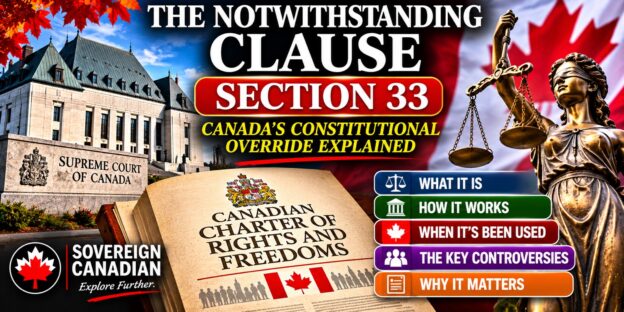
Introduction: a constitutional exception
On 27 October 2025, Alberta tabled a bill to end a province-wide teachers’ strike. Under a motion limiting debate, the legislature passed it effectively within a day, and it took effect on Royal Assent on 28 October, according to ABlawg’s account. It imposed contract terms and declared that it applied whatever the Charter of Rights and Freedoms said about freedom of expression and association.
That episode shows the central tension. An elected legislature claims a mandate to act for a majority. Individuals and minorities hold constitutional rights intended to constrain government power, including decisions supported by electoral majorities. Section 33, the notwithstanding clause, creates a limited exception to those protections, and courts stand between the two. Anyone wary of concentrated authority should ask who holds power at each step, a question also central to personal liberty in Canada.
This article explains what the clause says, why Canada adopted it, how governments have used it and what followed, and it endorses no government. As of 11 November 2026 the Supreme Court of Canada’s docket shows judgment reserved in the Quebec Bill 21 appeals heard in March 2026, and that judgment could change parts of what follows.
Continue reading