Category Archives: Food & Water

Topics involved with food and water sovereignty

June Garden

Your garden isn’t saving you money. It’s building something better.

It’s June. The tomatoes aren’t ready. The zucchini isn’t ready. But the lettuce is, and the arugula, and the chives have been good for a couple months, and if you’ve been paying attention there are beet greens and parsley and celery leaves ready to pull. That’s enough. That’s actually the whole point. And don’t forget to use and prune the basil – and cut those tomatoes suckers!

Let me tell you what I had for lunch today. Lettuce, arugula, some beet greens, fresh parsley, a few celery leaves — everything chopped together, feta on top. That’s it. Cost me maybe four minutes and a walk outside.

It was the best salad I’ve had in months. Not because it was complicated. Because I grew it, and I knew it, and it was sitting twenty feet from my back door this morning.

Now let’s get the honest part out of the way: a vegetable garden will probably not save you money. Factor in your time — real time, not romanticized time — the soil amendments, the seedlings, the watering, and a decent accountant would tell you the economics are marginal at best. (Nevermind the capital expense of the lumber and screws). You are definitely not saving time. A garden asks for your hours, regularly, without apology.

So why does the Sovereign Canadian worldview embrace it anyway?

Because the goal was never to optimize a grocery bill. The goal is to build a life that doesn’t feel like it needs escaping.


The returns that don’t show up on a spreadsheet

When personal finance people talk about returns, they mean percentages. Dividend yields. Net rental income. CAGR on your RRSP. Those things matter — we talk about them here constantly. But there’s a whole category of return that compounds just as surely, and almost nobody puts it in the model.

PHYSICAL HEALTH

Bending, lifting, carrying, digging. Unstructured movement that doesn’t feel like a workout because it isn’t one. Real sun, fresh air, and none of it requires a membership. Water in the morning with your coffee in hand and a podcast in your earbuds. Let you kids stay up a bit later at night to help you weed.

FOOD QUALITY

The gap between a grocery-store lettuce and one you cut this morning is not small. It’s not subtle. If you’ve eaten both, you know exactly what I mean. It has flavour. It’s bitter – a healthy bitter that tastes healthy to your genes.

MENTAL RESET

There is something genuinely therapeutic about dirt under your fingernails. The garden doesn’t care about your inbox. It operates on its own timeline and drags you into the present. Laugh when your son picks his first nettle (I laugh every time) – and praise him when he ‘dispatches’ his 500th Japanese beetle.

A REAL SKILL

Knowing how to grow food is durable. It doesn’t get delisted. It doesn’t get inflated away. It compounds quietly as your confidence and your yield both improve, year over year.


What you’re actually teaching your kids

June is a good time for this one, because June is honest. There’s no dramatic harvest moment yet. You’re out there watering, weeding, checking on things, being patient. And if your kids are with you, that’s the lesson — not the carrot-pull payoff moment, but the unglamorous middle part where you just show up.

They’re learning that outputs require inputs. That patience has a payoff. That food doesn’t originate in a plastic clamshell. That the physical world responds to effort in ways a screen never will.

They’re also outside. Moving. Working alongside you. That half hour in the garden might be the most connected time of your day with them — and it happened because you both had a reason to be there, not because you scheduled “quality time.”

The sovereign life isn’t built on maximizing efficiency. It’s built on choosing where you spend your irreplaceable hours. A vegetable garden is an expensive use of time. It pays you back in a currency most people stopped valuing before they could articulate what they’d lost.

And definitely get the bug container and put that caterpillar in it who’s been devouring your parsley. Give it the reject leaves and see if it will eat celery leaves instead….


The grocery comparison nobody wants to hear

Organic produce in Canada is expensive. Arugula, basil, tarragon, and herbs that cost more than they should and are wilted by the time you get it home. That math is real, and if you’re growing those things successfully, the offset is real too.

But here’s the comparison that actually matters. The gym membership you pay for delivers thirty minutes of elevated heart rate and a locker room. The garden delivers movement, fresh food, outdoor time, and a reason to go outside that your kids will actually follow you into. No supplement stack replicates an afternoon in the sun with your hands in the dirt.

You can’t buy that return. You can only put in the hours.


It’s June. Go pull some leaves.

You’re not getting tomatoes yet. You’re not getting zucchini. But if you planted anything this spring, there’s probably something ready right now that you haven’t harvested yet — because it doesn’t look dramatic enough to bother with.

Go bother with it. Chop it up. Add feta. Eat it outside if you can.

That’s the whole investment thesis.

Links:

OSC Seeds — Canadian seed supplier.
Rodale Institute — long-running, credible source on organic growing and soil health, non-government
Harvard Health — benefits of gardening — Harvard Medical School publishing, peer-credible without being a government nanny source

How to Slaughter a Turkey

Question Answered: How to Slaughter a Turkey

It’s Thanksgiving weekend and Turkey is on the menu.  Sure you could buy a frozen, or even a fresh turkey.  But maybe you raised a few birds over the summer, or somehow got your hands on a live one.  Now you’re wondering to yourself, how to slaughter a turkey?

Many of us have slaughtered chickens, and a lot of us have cleaned ducks.  But a Turkey is a lot bigger and a lot stronger.  So I decided to learn this for myself – of course I just searched for videos on YouTube.

Now killing animals is never fun, and neither is watching it on the internet.
But eating food that you grow at home is very fulfilling and one of the healthiest changes you can do in your life.  And if you are going to try butchering your own animals, you owe them to at least learn how to do it correctly ahead of time.

Continue reading

Apple Crisp Recipe

Apples are a blessing in Canada.  We can make apple pies, apple sauce, apple cider, dried apples, and add apple as a flavouring to many of our baked goods.  But the most common thing I make with them is Apple Crisp.

My Apple Crisp Recipe:

I hesitate to give exact measurements for this recipe, because they really aren’t all that important.  It’s not like we’re baking a cake or bread where more precise ratios are important.

  • Apples – as many as you think you need
  • Oatmeal – 1 cup
  • Butter – 1/2+ cup
  • Brown Sugar – 1/3 cup
  • Cinnamon – 1 tsp
  • Nutmeg – 3/8 tsp

Continue reading

GMO Food Labelling

GMO Food Labelling does not Mean Halting Research

Of more importance than the post on consumer nutrition responsibility, today I want to cover GMO food labelling.

GMOs are a hot topic for debate these days.  On one hand they allow farmers to grow more food, with less effort, and generally with the use of herbicide sprays that would kill the non-GMO versions of the plants.  Other GMOs have nutrients added in to the food to help prevent some malnutrition in children in poorer countries.  Golden Rice is the best example of that.

But that is exactly the issue, do we want to eat this food that has been heavily sprayed with roundup?  Do we want to eat food that has been modified at the genetic level with fish genes and a virus?

I won’t go into my beliefs on whether GMO foods are good or bad.  In short I think the research is good but I don’t want to consume them.  But there’s the problem, how do I know what foods have GMO ingredients in them and what foods do not?

Continue reading

Gardening, Fruit & Nut trees, Chicken, Animals, and Preserving

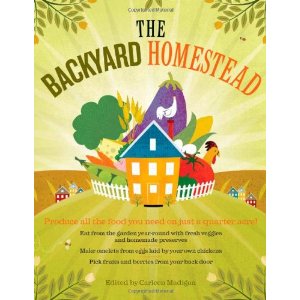
Book Review: The Backyard Homestead

The Backyard Homestead: Produce all the food you need on just a quarter acre!

I recently purchased the book The Backyard Homestead by Carlene Madigan (ISBN-10 1603421386 / ISBN-13 978-1603421386).  I found it to be a great introduction on the various fruits, nuts, vegetables, animals, and other items that you can have yourself; even in your urban backyard.  This is a great book to keep around for getting ideas for next year’s garden, figuring out how to preserve your harvest, and even giving me some ideas on how to incorporate animals into your food sovereignty plan.

Also, if any friends, family members, or spouses are reluctant to explore producing their own food, this is a great book to leave laying around for them the possibly pickup.  Covering most topics that a backyard homesteader may want to research, this book does make things seem quite simple and accessible to most people.

Continue reading

Getting started with Hunting

My Plans for Getting Started with Hunting

Even though I grew up in the country on a farm, raising and harvesting our own meat and poultry – I am slightly ashamed of saying that I have no experience with hunting.  I have never had a problem with hunters, and always wished that I had those skills.  But that seems to be the problem with hunting, most people who hunt were raised by other hunters (father, uncle, grandfather).  But these days you will find older non-hunters, such as myself, becoming interested in learning about hunting and then going out to the field or bush themselves.

I consider hunting to be an essential skill for anybody seeking personal independence and self reliance.  Not only are you harvesting natural resources that you did not have to feed or raise yourself, but this is also likely the healthiest meat that you can find.  Naturally bred, antibiotic and hormone free, non-GMO fed, natural spring watered, free-range, organic meat – Almost the way that nature intended for us to eat.  No factory-farmed meat can compare to the health benefits of consuming this natural resource.

Below you will find some of my initial thoughts on getting started with hunting, along with some of the information that I have gathered.

Hunting is an important part of the Food Pillar of Personal Sovereignty

Continue reading

A Tour of Our Summer Garden

A quick tour video of our summer garden

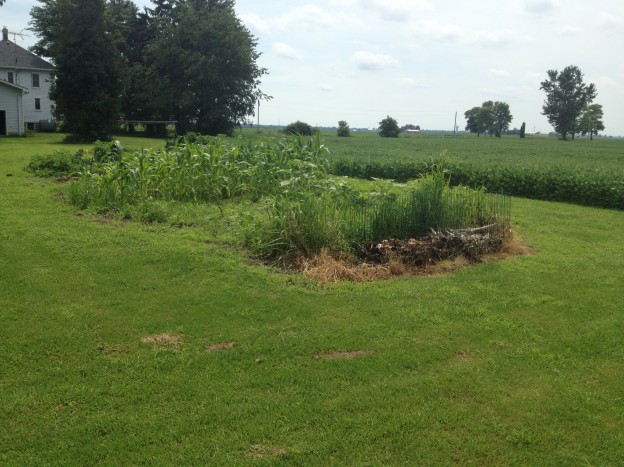
This is the type of garden I grew up with in southern Ontario, we could usually provide most of our vegetable requirements, and even put away a fair amount for the winter.  So continuing that trend, this is our summer garden for 2013.

I must say, this was planted before I really started learning anything about permaculture, self sufficiency, preparedness, raised beds, etc.  This is what came natural to us and, of course, we didn’t spray anything.  The only fertilization is compost and some cow manure.

Our ground is good for growning nightshades: tomatoes, eggplant, sweet peppers, hot peppers, etc.  Zucchini, squash, beans, and root vegetables grow well for us too.

A surprise this year was the size of the horseradish plants – the leaves were waist high!

Hopefully you enjoy – the garden will improve next year, I guarantee…