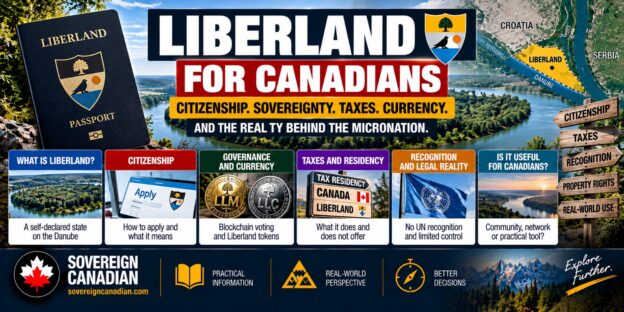
Liberland is a self-declared state on a roughly 7 square kilometre strip of Danube floodplain between Croatia and Serbia. It has a president, blockchain voting, two tokens and a citizenship application. It also has, by its own terms, no recognition from the United Nations or most states, and limited control over the land it claims.
The question I wanted answered is whether Liberland is a meaningful sovereignty tool for a Canadian, or effectively a digital country club built around libertarian ideals and blockchain governance. I do not mean that as an insult. A community, a governance experiment and a network can have real value. But they are different things from a recognized second passport, legal residency, tax residency, asset protection, enforceable property rights, a recognized business registration or an investment. This article keeps those categories apart, and it separates established facts, Liberland’s own claims, my interpretation and speculation.
Continue reading