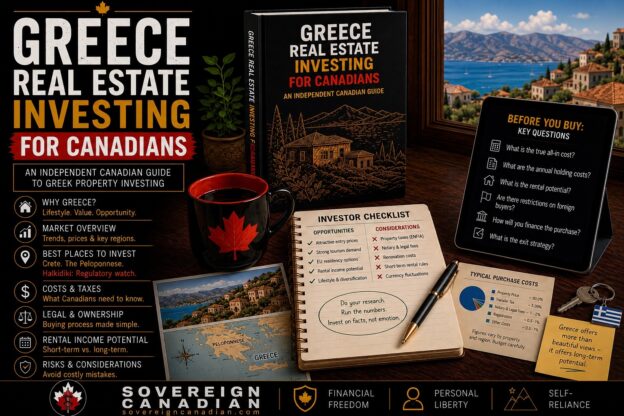
Greece real estate investing for Canadians guide - book, investor checklist, and Peloponnese coastal property on a desk

Greece Real Estate Investing for Canadians

Portugal sells you a legal system you already recognize. Greece sells you something else entirely: the lowest entry price left in Western Europe, a government that’s actively courting your capital, and a market that’s still catching up to where Spain and Portugal already are. That’s the trade. You give up some of the polish and predictability, and in exchange you get in earlier, cheaper, and with fewer people ahead of you in line.

If you’ve read the foreign real estate investing pillar post or the Portugal introduction post, you know the drill by now. This is the primer for the Greek arm of the series — the 30,000-foot view before we go deep on Athens, Crete, and the islands in later posts. It won’t make you an expert on Halkidiki versus the Peloponnese. It will get you to the point where you know whether Greece deserves a spot on your shortlist at all, and what you’d need to figure out next if it does.

Continue reading
Portugal real estate investing for Canadians guide featuring Lisbon Alfama azulejo buildings overlooking the Tagus River

Portugal Real Estate Investing for Canadians

Mexico gets the phone calls. Portugal gets the long-term relationship.

Portugal real estate investing for Canadians is a fundamentally different proposition than the Mexico series I’ve been building out — and if I’m honest about my own shortlist, Portugal sits near the top of it, right alongside Mexico and Italy. Possibly ahead of both on one specific dimension: it’s the easiest of the three to actually execute. If you’ve read the Mexico introduction post, you know my bias toward proximity — a place you can reach for a long weekend gets used, and a place that requires nine hours in the air becomes a once-a-year commitment no matter how good the intentions were at purchase. Portugal breaks that rule and gets away with it. It’s not close. It’s not cheap relative to Mexico. And Canadians are still buying there in serious numbers, because Portugal isn’t selling proximity — it’s selling a legal system you recognize, a currency that isn’t going anywhere, EU market access, and a lifestyle case that Mexico, for all its yield, can’t quite match.

Continue reading
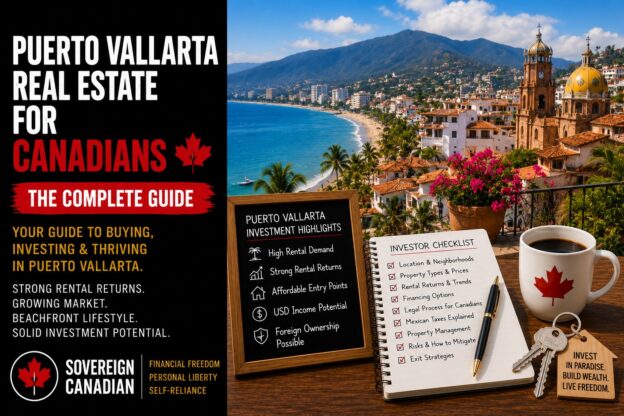
Puerto Vallarta real estate for Canadians guide, with Banderas Bay shoreline, the Church of Our Lady of Guadalupe, and an investor checklist

Puerto Vallarta Real Estate for Canadians

This is the post where the series changes states — literally. Everything we’ve covered so far in Mexico has been Quintana Roo: the Riviera Maya guide, the Playa del Carmen real estate deep dive, and the Tulum post all operate under the same state regulator, the same RETUR-Q registration regime, the same Caribbean demand engine. Puerto Vallarta real estate runs on different rails. It’s in Jalisco, on the Pacific, with its own tax rates, its own regulatory trajectory, and — as of February 2026 — its own headline risk that we need to talk about like adults.

Continue reading
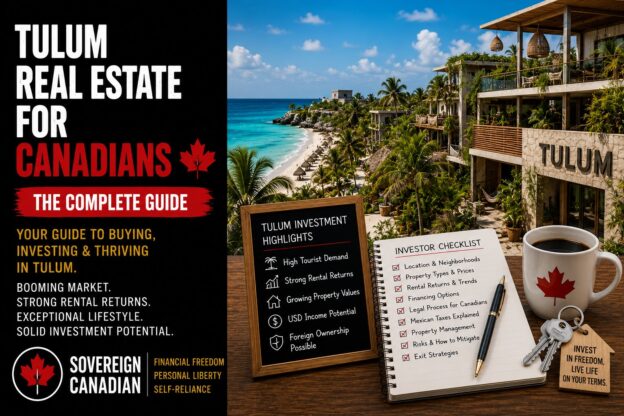
Tulum real estate for Canadians guide cover with beachfront condos, investment highlights, and an investor checklist

Tulum Real Estate for Canadians

In the Riviera Maya guide, I filed Tulum under “appreciation but submarket-dependent” and flagged La Veleta and Region 15 as oversupply risk before moving on. That’s a fair one-line summary, but it’s not a buying decision. Tulum is the most polarizing market in this series so far — it’s the one where the Instagram version and the spreadsheet version diverge the most — and it earns its own post.

If you haven’t read the earlier pieces, start with the Mexico introduction post for fideicomiso and T776 basics, then the Riviera Maya post for how Tulum stacks up against Playa del Carmen and Puerto Morelos. This post assumes you’re past that and specifically weighing a Tulum purchase.

Continue reading
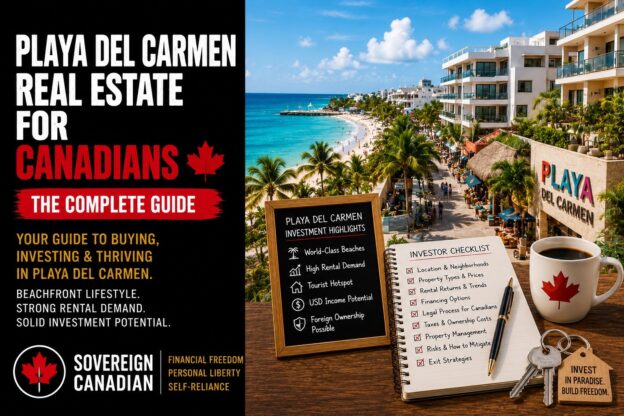
Playa del Carmen real estate for Canadians guide — beachfront condos, 5th Avenue, and an investor checklist with a Sovereign Canadian mug

Playa del Carmen Real Estate for Canadians

In the Riviera Maya guide, I called Playa del Carmen the yield-and-liquidity play of the region and moved on to Tulum and Puerto Morelos. A few of you pushed back on that — fairly. “Yield and liquidity” is a one-line verdict on a city of nearly 300,000 people with a dozen distinct submarkets, three tiers of buyer, and its own regulatory paper trail. This post is the deep dive Playa earns on its own.

If you’re new to this series, start with the Mexico introduction post for the fideicomiso and T776 basics, then the Riviera Maya post for how Playa stacks up against Tulum and Puerto Morelos. This post assumes you’ve already decided Playa is the city and want the neighbourhood-level, dollars-and-cents version.

Continue reading
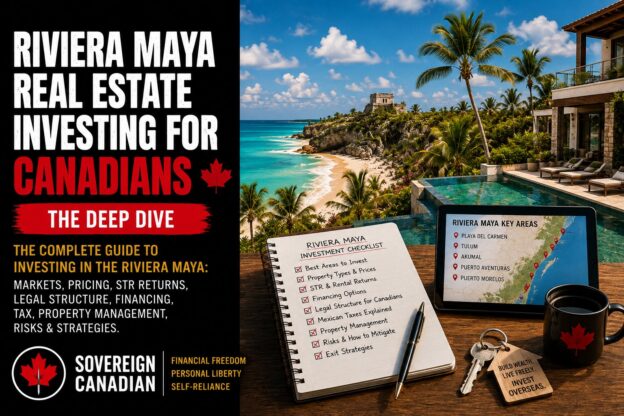
Riviera Maya real estate investment checklist and key area map — Playa del Carmen, Tulum, Akumal, Puerto Aventuras, Puerto Morelos

Riviera Maya Real Estate Investing for Canadians


A dual-benefit investment and snowbird home.

In the Mexico introduction post, I promised the area-specific deep dives were coming. This is the first one, and it’s the one most of you actually want: Riviera Maya, the stretch of Caribbean coast running from Puerto Morelos down through Playa del Carmen to Tulum. It’s the highest-volume short-term rental market in the country, the one with the strongest yield story, and — not coincidentally — the one with the most regulatory noise right now. If you’ve been circling this decision for a while, this post is meant to get you from “I like the idea” to “here’s the specific submarket, price point, and structure I’d actually pursue.”

Continue reading
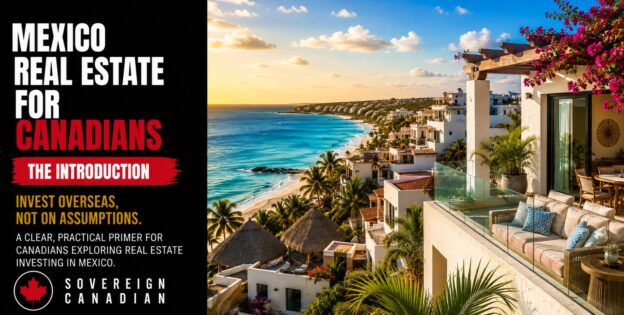
Mexico Real Estate for Canadians: The Introduction — cover image featuring a Riviera Maya beachfront condo development at sunset

Mexico Real Estate for Canadians: The Introduction

Mexico comes up constantly when Canadians start talking about buying abroad. It’s close, it’s cheap relative to home, the weather solves your February problem, and half the country seems to already have a cousin with a condo in Puerto Vallarta. But “close and cheap” isn’t a strategy – and Mexico has enough legal quirks, financing friction, and rental-market nuance that showing up with vibes and a vague sense that “Mexican real estate is a good deal” will get you into trouble.

This post is the country introduction, not the city guide. It won’t make you an expert on any single market – Riviera Maya, Puerto Vallarta, and Mérida each have their own deep dive, linked below. What it will do is give you the framework: where Canadians actually buy and why, how ownership legally works, how financing really functions (spoiler: not the way you’re used to), how the peso and the US dollar shape your real return, what the taxes look like on both sides of the border, and the practical difference between running a short-term rental and a long-term one. By the end, you’ll know enough to ask the right questions instead of the obvious ones. Mexico is one of the locations I’m thinking of for a next investment.

Continue reading
Foreign real estate investing for Canadians — Sovereign Canadian field guide, Canadian passport, globe, and due-diligence checklist on a desk with an overseas skyline

Foreign Real Estate Investing for Canadians: Where to Actually Start

This is the pillar post for the Sovereign Canadian international real estate series — the map that sits above every country deep-dive. Like everything here, it’s personal documentation of how I’m thinking about my own portfolio, not financial or legal advice. I’m figuring this out in public, country by country, and writing down what I learn.

Foreign real estate investing for Canadians usually starts with a feeling, not a spreadsheet. You’re standing on a beach in February — or, more likely, looking at a photo of one from your kitchen in Ontario at minus twenty — and something clicks. Why not own a piece of that? The impulse is fine. The problem is that most people never get past the impulse, and the ones who do tend to either overpay for a lifestyle fantasy or talk themselves out of a genuinely good move because the CRA paperwork looked scary from a distance.

I’ve been working through this the slow way: one country at a time, verifying the numbers before I write anything down. This post is the top of that pyramid. It’s the “why” and the “how it’s different when you’re Canadian” — the stuff that’s true whether you end up in the Riviera Maya or the Peloponnese. The individual country posts handle the “where.” This one handles the decision that comes first.

Continue reading
Canadian investor weighing second real estate options after buying a cottage — rental property, international real estate, and digital acquisition

Second Real Estate Investment: What Comes After the Cottage?

The cottage decision is behind me. If you followed along, you know how that analysis went — cottage vs. upsizing the primary residence, two mortgages vs. one, lifestyle purchase vs. an asset with optionality. The cottage won. And after one month of Airbnb hosting on Lake Huron, the numbers are pointing in the right direction — not cash-flow positive yet, not in shoulder season, but close enough that a full-season run (next year( should cover the carrying costs. That part of the thesis is holding.

So now what?

Continue reading
Canadian family overlooking a Mediterranean coastal town during their expat year with children

The Expat Year with Kids: What Age Works, and Where to Go

There’s a version of sovereignty that doesn’t involve spreadsheets or tax shelters. It involves pulling your family out of autopilot — the school, the suburb, the routine — and dropping everyone into a country where you don’t know how anything works yet.

The expat year. Living abroad, properly, with kids in tow.

Continue reading