
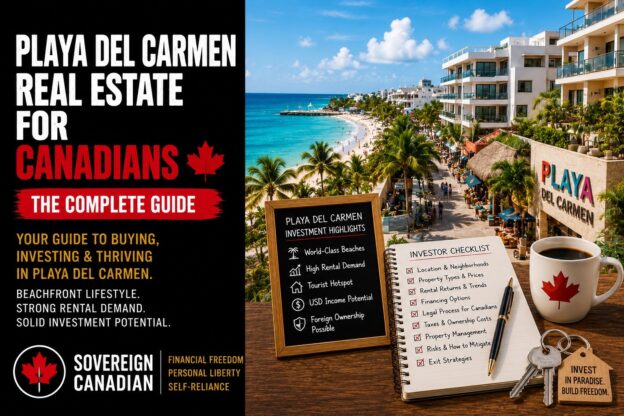
In the Riviera Maya guide, I called Playa del Carmen the yield-and-liquidity play of the region and moved on to Tulum and Puerto Morelos. A few of you pushed back on that — fairly. “Yield and liquidity” is a one-line verdict on a city of nearly 300,000 people with a dozen distinct submarkets, three tiers of buyer, and its own regulatory paper trail. This post is the deep dive Playa earns on its own.
If you’re new to this series, start with the Mexico introduction post for the fideicomiso and T776 basics, then the Riviera Maya post for how Playa stacks up against Tulum and Puerto Morelos. This post assumes you’ve already decided Playa is the city and want the neighbourhood-level, dollars-and-cents version.
Why Playa, Specifically
Playa del Carmen is the most mature real estate market on the Riviera Maya, and “mature” is doing real work in that sentence. The city’s population grew from roughly 50,000 in 2000 to almost 300,000 by 2025, and that growth curve shows no sign of flattening. Unlike Tulum, which is still working through oversupply in specific pockets, or Puerto Morelos, which is a value bet on infrastructure that hasn’t fully landed yet, Playa already has the tourism volume, the walkability, and the rental demand baked in. Analysts generally consider Playa del Carmen one of the most mature real estate markets in the region, attracting investors because of consistent tourism demand, walkable neighbourhoods, and a strong vacation rental market.
The trade-off is the one you’d expect: less speculative upside than a pre-boom submarket in Tulum or Puerto Morelos, more certainty that the rental demand you’re underwriting today will still be there in five years. Prices have risen more than 50% over the past few years and have now consolidated at a high level, which is the market’s way of telling you the easy money already happened. That doesn’t make it a bad investment — it makes it a different kind of investment than Tulum, and you should walk in knowing which one you’re buying.
The City-Wide Numbers
Before the neighbourhood breakdown, the baseline. As of early 2026, the average price per square metre for residential property in Playa del Carmen is approximately 71,000 MXN, or roughly $3,950 USD, though that average flattens out enormous variation between inland and beachfront zones. Compared to a year earlier, prices are up about 12% in nominal terms, or roughly 8% after adjusting for Mexican inflation — still hot, but no longer the 20%+ moves that defined the early part of the decade.
For yield: average prices around $4,200 per square metre put Playa between higher-priced Cancún and cheaper Tulum, with gross rental yields of roughly 6–10%. That range widens considerably once you get to neighbourhood-level detail below — some pockets clear 15%+ gross, others sit closer to 6% and earn their keep on appreciation instead.
Entry points by budget:
- $80,000–$150,000 USD — studios and small one-bedrooms in Ejidal, outer Colosio, or older Gonzalo Guerrero stock needing renovation. Older units in the “future development” tag can run $1,500–$1,700 per square metre and, once renovated, do well on the long-term rental market.
- $180,000–$350,000 USD — the workhorse two-bedroom condo range, the price bracket most international buyers actually land in, typically in a gated building with a pool.
- $500,000+ USD — roughly 100–130 square metres of condo, or townhome and small single-family product in gated communities like Playacar and strong parts of Zazil-Ha.
- $700,000+ USD — the true luxury tier, where you’re paying a clear premium for location, design, and brand rather than square footage.
Neighbourhood by Neighbourhood
This is the part that actually determines your outcome. Playa isn’t one market — it’s a dozen small ones stitched together, and getting the neighbourhood wrong is the single most common way Canadian buyers end up disappointed two years in.
Centro / 5th Avenue corridor. The tourist spine of the city and still the workhorse for short-term rental demand. Centro and Gonzalo Guerrero are the areas where short-term rental demand is highest, and downtown remains one of the strongest zones for vacation rentals because of how walkable it is — guests can reach restaurants, nightlife, shopping, 5th Avenue, transit, and the beach without a car. The catch is competition and noise. There’s heavy competition from other rentals, some buildings are aging, and noise can be a real issue depending on the specific street. Not all of Centro is equal — the area around the stadium is considered the most premium pocket within Centro, with tree-lined streets, cafes, and restaurants, while the commercial strip along Avenida Benita Juárez is low-end and worth avoiding. On safety: 5th Avenue itself is consistently rated one of the most heavily patrolled and safest streets in the city, given the sheer tourist and police presence at all hours. The trade-off of that foot traffic is petty crime — pickpocketing, phone snatching, and the occasional bag grab — which is a function of crowd density more than the neighbourhood being unsafe. Organized crime incidents in Playa are overwhelmingly targeted and cartel-on-cartel rather than random, but they have occasionally occurred in or near nightlife strips, so a unit a block or two off the loudest part of 5th Avenue is a reasonable way to keep the yield without sitting directly in the highest foot-traffic zone.
Gonzalo Guerrero. The city’s highest-yield pocket by the numbers. Gonzalo Guerrero shows estimated gross rental yields around 18–19%, driven by moderate purchase prices against strong rental demand. It’s also flagged as a top-performing Airbnb zone alongside Coco Beach and Playacar. This is the neighbourhood for buyers optimizing purely for yield over prestige. On safety: it’s generally described as well-lit, active, and residential enough to feel lived-in rather than purely transactional — one of the safer non-gated options in the city, though the usual urban precautions (secure your unit, don’t leave valuables visible, use reputable rideshare at night) still apply as they would anywhere.
Zazil-Ha / Coco Beach. The upscale, newer-build tier. These neighbourhoods offer newer buildings and modern designs, with a balance between beach proximity and a quieter, more residential feel that appeals to travellers wanting something calmer than downtown. The risk here is saturation — many new buildings contain multiple Airbnb units competing for the same guests, so a property needs to stand out rather than just being another identical condo, and parts of these zones are still fringe areas that are less desirable to rent or live in. It’s also one of the priciest tiers: Zazil-Ha, including the Coco Beach corridor, is among the three most expensive areas in the city, running roughly MXN 53,000–75,000 per square metre, with some luxury beachfront units pushing well past that. On safety: the concentration of tourism infrastructure in this corridor tends to come with a correspondingly consistent security presence, and it’s generally regarded as one of the calmer, more residential-feeling tourist zones. The fringe pockets flagged above for rental competition are the same pockets worth walking at different times of day before buying — “fringe” here refers as much to how established and populated a specific block is as it does to pricing.
Playacar. The established, gated, family-and-retiree community. Known for security, green space, and a more peaceful atmosphere, Playacar appeals to families, retirees, and long-term residents rather than the short-term party crowd. It’s also the most expensive neighbourhood by a wide margin — average prices for gated family homes and luxury villas range from MXN 12 million to MXN 40 million, and Playacar Fase 1 has the highest price per square metre in the city at roughly MXN 62,000/m². Worth flagging for STR-focused buyers: Playacar Phase I and Phase II have some of the strictest effective short-term rental restrictions in the city due to strong HOA governance. If cash flow from nightly rentals is the plan, confirm the specific building’s HOA rules before you fall in love with the lifestyle. On safety: Playacar is consistently cited as one of the safest, calmest neighbourhoods in the city — gated access, private security, and a mixed local-and-expat resident base are the whole reason the HOAs command the premium they do. If personal safety and predictability are as important to you as the numbers, this is the neighbourhood built for that priority.
Colosio and the emerging inland zones. The value-and-momentum play. Colosio, especially from CTM north to 110th Street, is one of the most visibly gentrifying neighbourhoods in the city, with property prices appreciating roughly 8–15% annually over the past two years. Colosio and CTM offer lower entry prices, while El Cielo and Selvamar are greener, less dense alternatives — all earlier in their growth cycle, which means more upside but also more execution risk if the gentrification story stalls. On safety, and this matters more here than anywhere else on this list: Colosio is the one neighbourhood in this post that shows up repeatedly and specifically in safety guides as an area to exercise real caution, with several sources describing pockets of higher crime and visible poverty that are a step removed from the tourist economy entirely. That doesn’t automatically disqualify it as an investment — the gentrification thesis is partly a bet that this changes over time — but it does mean the appreciation story and the safety picture are the same story here, not two separate ones. Walk the specific block, at a few different times of day, before you commit capital, and weight that street-level diligence more heavily than you would in any other neighbourhood on this list. El Cielo and Selvamar, being greener and less dense, generally read as calmer than Colosio’s more built-up core, but they’re also earlier-stage and less battle-tested — do the same walk-it-first diligence rather than assuming “not Colosio” means “safe.”
The one-line map: Centro and Gonzalo Guerrero for rental yield and walkability, Zazil-Ha and Coco Beach for newer product and quieter tourism (watch the saturation), Playacar for lifestyle, capital preservation, and the highest safety margin (check the HOA on STR), Colosio and the inland fringe for buyers betting on appreciation ahead of the crowd — but only after walking the specific streets themselves.
A Word on Cartel Presence and Petty Crime, City-Wide
Worth addressing directly rather than neighbourhood-by-neighbourhood, because the pattern is consistent across the city. Organized crime is present in Quintana Roo, and Playa del Carmen isn’t exempt from it — the state carries a U.S. State Department Level 2 advisory (the same level as much of Western Europe), and there have been isolated, high-profile incidents in nightlife areas over the past few years. Nearly every account of these incidents, including from long-term residents, describes them as targeted and cartel-on-cartel rather than random violence directed at tourists or property owners, and the local economy’s near-total dependence on tourism creates a strong incentive for that pattern to continue. Recent state-level crime data reported a 76% reduction in intentional homicides in Quintana Roo compared to 2024, part of a downward trend that’s held since 2025.
The more relevant risk for a property owner day-to-day is petty crime — pickpocketing, phone and bag snatching, and the occasional break-in — which tracks with foot traffic and is manageable with standard precautions rather than anything specific to real estate ownership. It’s also worth knowing, independent of personal safety, that petty theft and break-ins are a real operational consideration for a short-term rental: budget for a decent lock, a security deposit or damage protection policy, and a property manager or trusted local contact who can respond quickly if something goes wrong while you’re back in Canada.
None of this should be the deciding factor on whether to invest in Playa del Carmen — millions of tourists and thousands of foreign owners operate here without incident every year, and the city’s whole economic model depends on that continuing. But it should factor into which specific neighbourhood and which specific block you buy on, the same way you’d weigh a neighbourhood’s crime profile before buying an investment property in Toronto or London, Ontario.
The Regulatory Picture — and Why It’s Not Optional Anymore
This is the section that’s changed the most since the Riviera Maya post, and it applies to Playa with particular force because Playa carries the highest concentration of STR units in the state outside Cancún.
Quintana Roo’s revamped tourism law, effective from August 2025, imposes stricter controls on digital lodging platforms and requires all hosts to register with the State Tourism Registry, RETUR-Q. Failure to register can lead to fines up to 100,000 pesos, and since 2024, platforms like Airbnb and Vrbo are required to share their listing data with the state, so authorities can compare live listings against the RETUR-Q and SATQ databases directly — this isn’t a rule that relies on self-reporting.
On top of registration, hosts must also obtain a state operating license through the Quintana Roo Tax Administration Service, and properties without one risk delisting by the platforms themselves. Then there’s the tax layer: Quintana Roo enforces a 6% lodging tax on short-term rentals, which Airbnb is required to withhold directly when guests pay through the platform, on top of the federal ISR and IVA withholding that already applies to platform income.
The practical upside buried in this: there’s no principal residence requirement to operate a short-term rental in Playa del Carmen, and no citywide cap on how many properties one person or entity can list — the multi-listing operator model that built much of Playa’s STR inventory is still legal. What’s changed is that it’s no longer informal. Build the RETUR-Q registration, the SATQ operating license, and the 6% ISH into your underwriting from day one, not as an afterthought once you’re already collecting bookings. If your target building sits in Playacar or one of the newer Zazil-Ha towers, confirm the HOA’s own STR stance before you close — state compliance doesn’t override a building that has voted to restrict short-term guests.
Financing and Closing Costs: The Canadian Reality Check
Nothing has changed here since the intro post, and it’s worth restating because it’s the number one thing that trips up first-time buyers. Mexican bank financing for non-resident foreigners is thin, expensive, and inconsistent — most Canadian buyers in Playa are cash buyers or use a HELOC against Canadian real estate to fund the purchase. If you’re financing through a Canadian HELOC, run the numbers on Canadian borrowing costs against the property’s actual rental yield before you assume leverage improves your return; it often just adds currency and rate risk on top of the property risk you’re already taking.
Developer payment plans have become more flexible in 2026, with several developers offering 24–36 month plans requiring 30–50% down — a reasonable middle path if you want exposure without a full cash outlay, but treat developer financing as a relationship with that specific developer’s balance sheet, not a bank.
On the fideicomiso and closing cost mechanics — the bank trust structure required for foreign ownership within the restricted coastal zone, the notary fees, acquisition tax, and annual trustee fee — those are covered in full in the Mexico introduction post and don’t differ meaningfully by Riviera Maya submarket. Budget the standard 5–7% of purchase price in closing costs on top of the property price itself, and the fideicomiso’s annual maintenance fee (typically $500–$700 USD) as a permanent carrying cost.
If you’re still weighing Playa against other places to put that next dollar of capital — a domestic rental, a digital asset, or building income organically instead — that’s exactly the decision I walked through in Second Real Estate Investment: What Comes After the Cottage. Worth reading before you commit if offshore property is one option among several rather than a foregone conclusion.
What I’d Actually Do
If I were putting capital into Playa del Carmen today, in order of priority:
- Gonzalo Guerrero or Centro, sub-$250,000, walkable to 5th Avenue but off the loudest blocks — this is the yield play, and it’s the closest thing Playa has to a formula that’s worked for a decade.
- A specific Zazil-Ha or Coco Beach building with a demonstrated STR track record and an HOA that’s on record supporting short-term rentals — newer product, but do the diligence on that building’s occupancy and competition before buying, not after.
- Playacar only if the primary goal is lifestyle and capital preservation, not cash flow — confirm the HOA’s STR position first, and go in expecting appreciation and personal use as the return, not nightly income.
- Colosio or the inland fringe only with real conviction on the gentrification thesis and a longer hold horizon — highest potential upside, least established rental base, most execution risk.
Across all four: build RETUR-Q, SATQ licensing, and the 6% ISH into your first-year numbers as fixed costs, not optional line items, and confirm building-level STR rules in writing before you close — not after you’ve already priced out the Airbnb income.
Next up in this series: Tulum’s submarket-by-submarket breakdown, since “watch the oversupply” deserved more than the one paragraph it got in the Riviera Maya post.
See further reading:
- Rules (RETUR-Q registration): https://siturq.gob.mx/
- Search for a place (Inmuebles24 listings): https://www.inmuebles24.com/inmuebles-en-playa-del-carmen.html
- Find a property manager (licensed agents): https://playadelcarmen.ampi.org/
- Find a property manager (management standard/benchmark): https://www.vrma.org/
This post is for informational purposes only and does not constitute financial, legal, or tax advice. Real estate investing carries risk, and cross-border transactions add legal and tax complexity specific to your situation. Consult a qualified financial advisor, cross-border tax professional, and Mexican real estate lawyer before making any purchase.