
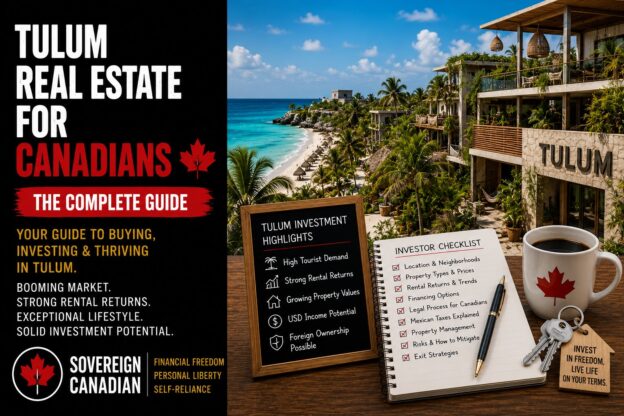
In the Riviera Maya guide, I filed Tulum under “appreciation but submarket-dependent” and flagged La Veleta and Region 15 as oversupply risk before moving on. That’s a fair one-line summary, but it’s not a buying decision. Tulum is the most polarizing market in this series so far — it’s the one where the Instagram version and the spreadsheet version diverge the most — and it earns its own post.
If you haven’t read the earlier pieces, start with the Mexico introduction post for fideicomiso and T776 basics, then the Riviera Maya post for how Tulum stacks up against Playa del Carmen and Puerto Morelos. This post assumes you’re past that and specifically weighing a Tulum purchase.
Why Tulum Is a Different Conversation Than Playa
Playa del Carmen is a mature market with three decades of price history and a downtown that isn’t going anywhere. Tulum is still, structurally, a boomtown — and boomtowns come with a specific kind of risk that doesn’t show up in the marketing deck.
Two things happened at once here. First, Tulum International Airport opened at the end of 2023, cutting out the ninety-minute drive from Cancún and putting direct flights into the middle of what used to be a backpacker beach town. Second, developers built into that story aggressively — thousands of condo units, concentrated in a handful of master-planned neighbourhoods, most of them explicitly marketed to foreign investors as short-term rental plays rather than to local families as housing. That combination is why Tulum has both the best appreciation story on this coast and the highest supply risk. Both are true. The neighbourhood you buy in determines which one you actually experience.
The Neighbourhoods, and What Each One Actually Is
Tulum doesn’t have one price per square metre, it has five or six markets wearing the same municipal boundary. Here’s the breakdown that matters for a buying decision — and since safety comes up in nearly every conversation I have about this market, I’ve added a note on it for each area. The short version, before the detail: Quintana Roo sits at a Level 2 travel advisory, cartel-related violence in the region is overwhelmingly gang-on-gang territory disputes rather than anything directed at tourists or property owners, and the more common issues investors and tenants actually run into are petty theft, taxi and bill overcharging, and — worth knowing if you’ll be visiting your own property — the occasional roadside stop looking for a “fine.” None of this is unique to Tulum among Mexican tourist markets, but it’s part of the underwriting, not just the travel-blog conversation.
Aldea Zama is the liquid asset. Paved roads, underground utilities, the deepest resale comp history in town, and the highest name recognition among the exact remote-worker and expat tenant pool you’re renting to. Prices run roughly MXN 46,000–68,000 per square metre depending on the source and the specific pocket, with gross rental yields around 7% — the highest in Tulum, driven by the fact that Aldea Zama commands the highest average rents in the city and guests search it by name. You’re not buying a discount here. You’re buying certainty: if you need to sell in three years, this is the neighbourhood where that’s realistic. On safety, this is also consistently the neighbourhood residents and property managers point to first — gated, 24/7 security, well-lit main streets. That doesn’t make it immune to petty crime (isolated muggings and bike theft get reported here too, same as any residential area), and it’s quieter at night, which is a double-edged sword: fewer people around cuts both ways.
La Veleta is the yield play with an asterisk. It’s the trendiest zone by reputation — the Calle 7 Sur restaurant corridor now rivals the beach strip for quality dining, and the demographic has visibly shifted toward digital nomads and coworking-space regulars over the past three years. Entry prices run 15–30% below Aldea Zama, and gross yields land around 6.5–7%, sometimes higher on smaller, well-differentiated units. The asterisk is infrastructure: plenty of streets here are still unpaved, drainage is inconsistent in rainy season, and the sheer volume of comparable inventory means resale pricing power is weaker than the yield numbers suggest. Confirm the specific street’s paving status before you sign anything — this isn’t a minor detail in Tulum, it’s the difference between a five-minute walk to dinner and a mud problem every June through October. Safety-wise, La Veleta sits alongside Aldea Zama as one of the areas residents call comfortable, day or night, on the main avenues — but it’s less enclosed, with more construction sites and unlit side streets, and it’s the neighbourhood most often mentioned alongside opportunistic theft rather than anything more serious.
Region 15 (Kukulcan corridor) is the appreciation bet. Newer inventory, lower per-square-metre pricing than Aldea Zama, and it’s pricing in the value of a road connection that’s still being built out. Buy pre-construction here and you’re underwriting a bet on infrastructure catching up to demand — which has worked before in this region, but the gap between Region 15 and Aldea Zama pricing has already compressed meaningfully over the past year, so the easy money on this trade is smaller than it was in 2023. It’s also less established from a security standpoint than Aldea Zama or La Veleta — less foot traffic, fewer of the security cameras and lighting upgrades the municipality has been rolling out in the more built-up zones, which is a normal feature of a still-developing area rather than a specific red flag, but it belongs in your due diligence alongside the road timeline.
Tulum Centro is the value-and-stability option most investors skip past. Lower price per square metre than any of the above — MXN 35,000–44,000/m² by most estimates — and lower gross yields to match, around 4.5–5%. What it has instead is the deepest long-term tenant demand in the city: local workers, service-industry employees, Mexican families who need walkability to jobs rather than proximity to a beach club. If you want a lower-drama, lower-yield hold with genuine local rental demand instead of a bet on tourist flow, Centro is the honest answer, even though it doesn’t come up in influencer content. Centro’s main avenue and tourist-facing blocks are well-trafficked and generally considered fine, day or night; the caution locals and long-term residents mention most is the stretch connecting Centro to Aldea Zama after dark — an area sometimes called “Invasion” — which is worth a taxi rather than a walk if you’re viewing property there in the evening.
Region 8, Selvazama, and Holistika are the smaller, pricier specialty plays — Region 8 for beach-adjacent growth at Aldea Zama-comparable pricing, Selvazama for master-planned premium finishes, and Holistika for the wellness-brand niche that now prices above several inland neighbourhoods people assume are cheaper. None of these are entry-level, and none of them are where I’d point a first-time Mexico buyer.
Tankah and the Zona Hotelera (beach road) are the trophy-asset tier — think MXN 90,000–128,000+ per square metre, villas well north of USD 600,000, and nightly rates that can hit $500–$1,000+ for the right property during festival weeks. This is cash-buyer territory with hurricane exposure and HOA rules that often restrict short-term rentals outright. Beautiful properties, wrong entry point for most readers of this series. Worth knowing if you’re evaluating a beach-road villa as a rental: this strip is also Tulum’s nightlife and festival corridor, and the drug-and-party scene concentrated here is the specific context most cartel-related incidents in the region trace back to — disputes between rival groups over that trade, not attacks on property owners or general tourists. It’s a reason to vet your property management and guest screening carefully if you’re renting here, not a reason to avoid the area outright.
A Direct Note on Cartel and Petty Crime
Quintana Roo carries a Level 2 “exercise increased caution” advisory from both Canadian and U.S. governments, the same tier as several major European destinations. The pattern that matters for an investor: cartel-related violence in the region is almost entirely disputes between rival groups over drug territory, concentrated around the nightlife and party scene rather than residential or investment neighbourhoods, and it is not directed at tourists or property owners. That’s a meaningfully different risk than what a headline about “cartel violence in a Mexican resort town” implies, and it’s the consistent finding across residents, property managers, and official travel guidance alike.
What you’re more likely to actually deal with as an owner or landlord: petty theft, bike and phone theft, taxi and bill overcharging, and occasional roadside stops by police looking for an informal “fine” — an irritation and a cost, not a safety threat. Standard precautions apply and matter more than which neighbourhood you choose: don’t walk alone on unlit streets after dark, use registered taxis, keep valuables out of sight, and — if you’re managing the property yourself on visits — a local property manager who knows the current on-the-ground situation is worth the fee. None of this should be a dealbreaker for buying in Tulum; it should be priced into how you manage the property and brief your guests, the same way hurricane risk gets priced into your insurance.
The Occupancy Number Nobody Puts in the Brochure
Here’s the figure that matters more than any price-per-square-metre table: Tulum now has upward of 8,000 active Airbnb-style listings, and citywide average occupancy sits somewhere around 34–44%. Compare that to the far tighter, more mature Playa del Carmen market and you can see the difference between a city with too much comparable supply and one that’s absorbed its growth. Top-performing, well-managed listings in the best neighbourhoods still clear 55–65% occupancy and $6,000–$12,000 USD a month in peak season — but “well-managed” and “best neighbourhood” are doing a lot of work in that sentence, and the market-wide average tells you what happens to a generic unit with mediocre photos and no dynamic pricing.
This is the single biggest gap between what a Tulum pro forma promises and what a Tulum property actually delivers. Ask any seller for the verified rental history of the exact unit — not developer projections, not “comparable units typically earn” — before you underwrite the deal.
The Regulatory Picture
The same state framework covering Playa del Carmen applies here, and it tightened materially in the back half of 2025. To operate a legal short-term rental in Tulum you need RETUR-Q registration with the state tourism registry, a state operating license through SATQ (the Quintana Roo Tax Administration Service), an RFC for tax reporting, and Civil Protection sign-off on basic safety items — fire extinguishers, first aid, emergency signage. Fines for skipping registration run up to MXN 100,000, and enforcement has genuinely picked up since the registry became mandatory. The state charges a 5–6% lodging tax on top of federal ISR income tax; Airbnb now withholds and remits the lodging tax automatically on most bookings, which simplifies your life but doesn’t remove the ISR obligation.
One nuance worth flagging: unlike Playa or Cancún, Quintana Roo imposes no minimum-stay or maximum-nights cap in Tulum specifically, so the regulatory risk here is compliance-and-paperwork risk rather than operational-restriction risk. The bigger practical filter is HOA rules — plenty of Aldea Zama and beach-zone buildings cap or ban short-term rentals outright at the building level, which matters more to your actual yield than anything the state does.
Fideicomiso, Financing, and Tax — the Short Version
The ownership mechanics don’t change from the rest of this series: Tulum sits inside the restricted zone, so you’ll hold title through a fideicomiso bank trust, running roughly $2,000–$3,000 to set up and $550–$1,000 a year to maintain. Financing remains the same story as Playa and Riviera Maya broadly — Mexican bank mortgages for foreigners are rare and expensive, developer financing on presales is common but short-term, and most Canadian buyers here are either paying cash or financing against home equity back in Canada. The T776, T1135, and T2209 mechanics for reporting foreign rental income and paying Canadian tax on it are unchanged from what I laid out in the reconnaissance post — read that one in full if you haven’t, because I won’t re-run it here.
What I’d Actually Do
If someone asked me directly where to put money in Tulum right now, ranked:
- Aldea Zama, a well-located two-bedroom condo, if liquidity matters to you. You’re paying a premium for the ability to sell this in three to five years without a discount. Worth it if resale flexibility is part of your plan.
- A finished, HOA-friendly building in La Veleta, on a paved street, if yield is the priority. Skip anything still surrounded by construction dust, and get the HOA’s short-term rental policy in writing before you sign — not after.
- Tulum Centro, if you want the least drama and don’t need tourist-tier returns. Lower yield, but the tenant base is real Mexican demand, not competing against 8,000 other Airbnb listings for the same guest.
- Region 15 pre-construction, only with real conviction on the infrastructure timeline and only with capital you can afford to have illiquid for longer than the developer promises.
What I wouldn’t do is buy a generic Region 15 or La Veleta condo off a glossy rendering, underwrite it against “projected” yield, and assume Tulum’s growth story does the rest of the work. The market has enough supply now that mediocre units sit for six to twelve months at a discount while good ones in the right neighbourhood still move in six to twelve weeks. Which one you end up owning depends entirely on the decisions in this post, not on Tulum’s reputation.
See further reading:
RETUR-Q (State Tourism Registry registration)
SATQ (Quintana Roo Tax Administration Service — operating license / COFE)
SHF Housing Price Index (Índice SHF de Precios de la Vivienda)
Global Affairs Canada — Travel Advice and Advisories for Mexico
Tulum International Airport (official government page, Grupo Mundo Maya)
SITUR-Q — Quintana Roo State Tourism Indicators (occupancy, arrivals, RETUR-Q lookup)
This post is for informational purposes and reflects publicly available market data as of mid-2026. It isn’t legal, tax, or investment advice — talk to a cross-border accountant and a Mexican real estate lawyer before you commit capital.