
Featured post
Bigger house or finish the basement: a two-storey home exterior at dusk beside a finished basement living room.

Bigger House or Finish the Basement? How I’m Actually Thinking About It

I’ve noticed something over the last few years as I’ve written more for Sovereign Canadian. Almost every major financial decision eventually disguises itself as something much smaller. Buying a cottage isn’t really about buying a cottage. Buying offshore real estate isn’t really about buying another property. Even deciding whether to acquire a business or continue investing in index funds isn’t fundamentally about the asset itself. They’re all capital allocation decisions. They’re simply different ways of answering the same question: where should the next chunk of our family’s wealth go?

That realization is why I’ve become less interested in questions like “Can I afford it?” and much more interested in “What am I giving up by saying yes?” Every major purchase closes off other possibilities. Every dollar committed to one decision is a dollar that isn’t available for another. Sometimes the answer is still obvious. Sometimes it isn’t.

This latest decision has been disguised as a basement renovation.

Continue reading

Featured post
Three colour-coded doors labelled FIRE, FIRE Light and Coast FIRE opening onto Canadian sunset scenes — three paths to financial independence in Canada.

FIRE, FIRE Light, and Coast FIRE: Three Doors Out of the 40-Year Grind

Most people hear “FIRE” and picture a 34-year-old in a hammock who will never touch a spreadsheet again. That version exists. But it’s one door out of three, and for a lot of higher-earning Canadians it’s the wrong one to walk through first. Financial independence isn’t a single finish line — it’s a spectrum of how much freedom you’re willing to buy now versus how much you’re willing to defer.

Continue reading
Featured post
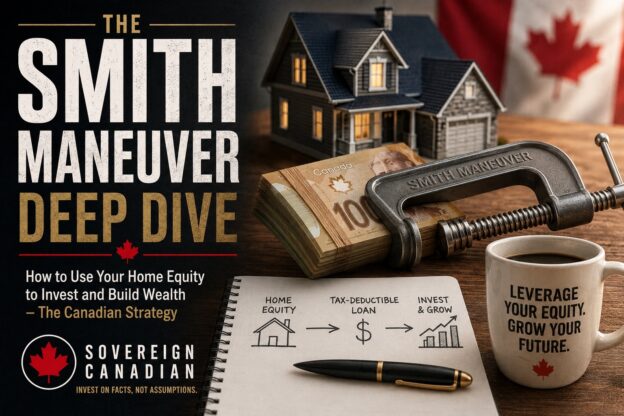
Smith Maneuver diagram showing the readvanceable mortgage conversion loop for Canadian homeowners

The Smith Maneuver: A Deep Dive for Canadians Who’ve Already Read the Hype

The Smith Maneuver might be the most over-marketed strategy in Canadian personal finance. Search for it and you’ll find an ecosystem of certified specialists, courses, and books all selling the same dream: turn your mortgage into a tax deduction and retire rich on the spread. The pitch is seductive because the mechanics are real — this is a legitimate, CRA-recognized structure, not a loophole. But “legitimate” and “right for you” are different questions, and almost nobody selling the Smith Maneuver is incentivized to tell you when the answer is no.

Continue reading
Featured post
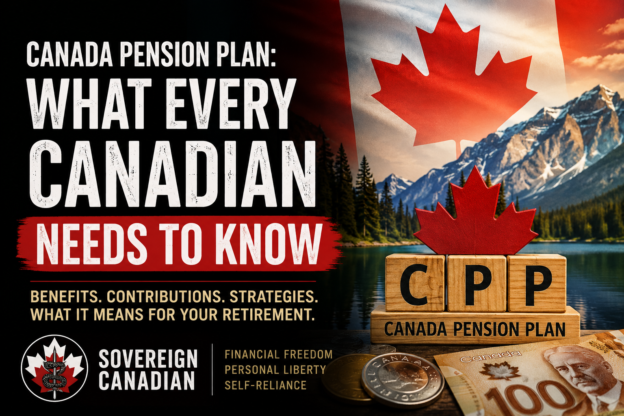
Canada Pension Plan: What Every Canadian Needs to Know — Sovereign Canadian featured graphic with CPP wooden blocks, Canadian flag, and a $100 bill.

Canada Pension Plan: The 2026 Owner’s Manual

Most Canadians treat the Canada Pension Plan the way they treat the furnace in the basement — they assume it works, they resent the bill, and they never once read the manual. That’s a mistake. The CPP is one of the few pieces of your retirement that is inflation-indexed for life, backed by an $800-billion sovereign fund, actuarially certified to last three-quarters of a century, and — crucially for anyone thinking about how their assets survive contact with creditors, divorce, or a move abroad — structured very differently from the retirement accounts you actually own.

I want to walk through the whole thing the way I’d want it walked through for me: how the money goes in, where it sits, whether it’s actually solvent (spoiler: it’s in far better shape than the American equivalent), what it pays out, when you should turn it on, and what happens to it when you die or when a creditor comes knocking. I’ll default to Ontario for the tax examples, and I’ll flag the figures worth double-checking against the official rate card at publish time, because these numbers move every January.

Let’s read the manual.

Continue reading
Featured post
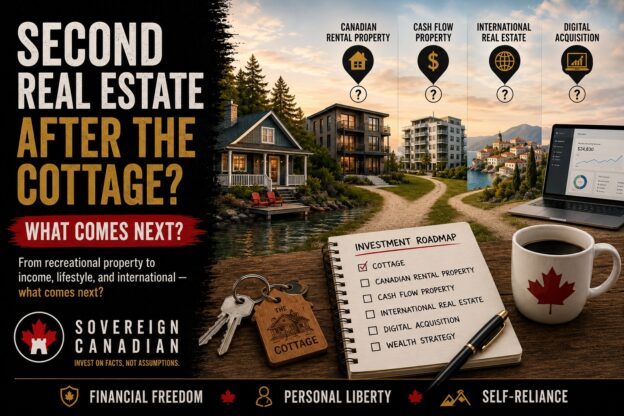
Canadian investor weighing second real estate options after buying a cottage — rental property, international real estate, and digital acquisition

Second Real Estate Investment: What Comes After the Cottage?

The cottage decision is behind me. If you followed along, you know how that analysis went — cottage vs. upsizing the primary residence, two mortgages vs. one, lifestyle purchase vs. an asset with optionality. The cottage won. And after one month of Airbnb hosting on Lake Huron, the numbers are pointing in the right direction — not cash-flow positive yet, not in shoulder season, but close enough that a full-season run (next year( should cover the carrying costs. That part of the thesis is holding.

So now what?

Continue reading
Featured post
Cottage vs upsizing your home in Canada — two mortgages, one builds wealth

Cottage vs. Upsizing Your Home: Which Mortgage Decision Actually Builds Wealth?

Many people with a growing family and some equity hits the same fork in the road.

Do you upgrade and buy a bigger, better house? Or do you buy a cottage?

Both moves can cost roughly the same. Both put you ~$500k deeper in debt. But they are definitely not the same decision.

Continue reading

REITs vs Direct Real Estate Investing for Canadians

If I have $250,000 available for real estate, why would I buy a building at all?

That is the honest version of this question, and almost nobody asks it that way. The usual framing is “REITs vs rental property,” which quietly assumes the two are the same thing delivered through different pipes. They are not. One is a security I can buy before lunch and sell before dinner. The other is a business I operate, or an asset I hold in a country that is not mine to be pushed out of. Treating them as interchangeable is the first mistake.

Continue reading
US real estate investing for Canadians – Statue of Liberty, Lower Manhattan skyline, One World Trade Center, and American flag, Sovereign Canadian field guide

United States Real Estate Investing for Canadians

Every country in this series has forced me to answer one uncomfortable question before I would put my own money into it.

Mexico made me ask whether a foreigner can really own coastal property, or whether the fideicomiso is a polite fiction. Spain made me ask whether regulation itself has quietly become the largest line item in the risk column. Italy made me ask whether quality of life can be booked as an investment return, or whether that is just a story people tell themselves to justify a purchase they made with their hearts.

The United States asks a stranger question, and it is a question about the buyer rather than the country.

Why do so many Canadians assume American real estate is easy, and are they right to?

Continue reading
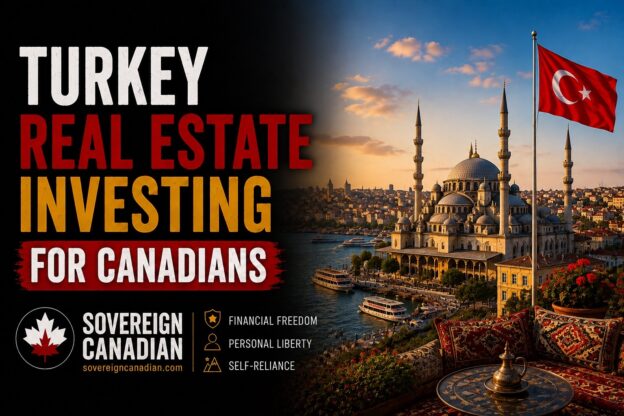
Turkey real estate for Canadians – Istanbul skyline overlooking the Bosphorus with a historic Ottoman mosque, Turkish flag, and waterfront neighbourhoods, Sovereign Canadian field guide.

Turkey Real Estate Investing for Canadians

Every country in this series forces one question before any other: is the cheap headline price telling me the asset is undervalued, or is it telling me the market is pricing in risk I have not fully counted yet? Turkey is the purest test of that question I have found. Nowhere else in the Mediterranean can a Canadian buy a modern two-bedroom apartment near a beach for a number that looks like a rounding error next to the Costa del Sol or the Algarve. And nowhere else does the reason for that price gap come down so completely to a single word: the lira.

This is the country introduction, not the city guide. I want to walk through how Turkey fits into an internationally diversified real estate portfolio for a Canadian, who it genuinely suits, who it does not, and which regions deserve their own dedicated write-ups later. Istanbul, Antalya, Bodrum, Izmir, Fethiye, Alanya and Cappadocia are all different markets serving different buyers, and I will sketch each one, but I am not trying to substitute for a proper deep dive on any of them here. This is the map before the road trip.

The central question to hold the whole way through: does Turkey deserve a place in a Canadian’s international real estate portfolio, or is the low entry price largely compensation for currency, inflation, legal and political risk a Canadian is not being paid enough to take? I am going to give you my answer and show my work.

Continue reading
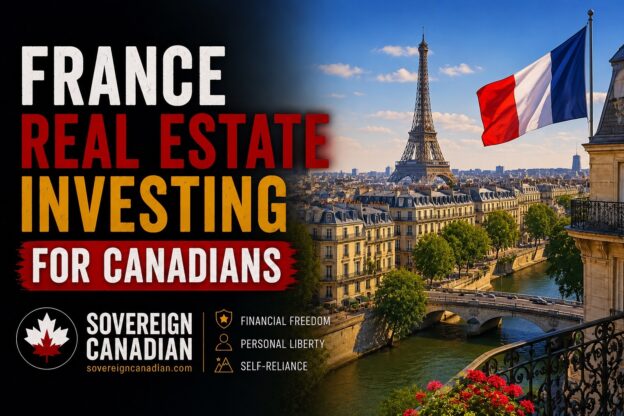
France real estate investing for Canadians – Paris skyline with the Eiffel Tower, the Seine River, Haussmann architecture, and the French flag, Sovereign Canadian field guide

France Real Estate Investing for Canadians

This is a country deep-dive in the Sovereign Canadian international real estate series. Like everything here, it is personal documentation of how I am working through my own portfolio decisions, not financial, tax, or legal advice. The Canadian-side machinery that sits above every country in this series – the CRA reporting, the financing reality, the four reasons any of us do this – lives in the foreign real estate investing pillar post. France also turned up in my offshore real estate survey as one of the countries Canadians consistently buy in, which is what earned it its own post. France has some of the highest carrying taxes and the most bureaucratic buying process in this entire series, so I verify the numbers before I write them down and I flag the ones that are moving right now.

France is the country everyone in this series has an opinion about before they have a spreadsheet. Mexico sells proximity. Portugal sells the easy on-ramp to Europe. Italy sells romance you have to renovate. France sells something more complicated: the single most-visited country on earth, world-class healthcare and rail, a rule-of-law system that has protected private property through revolutions and republics, and a lifestyle so specific that people build entire retirements around a village they visited once. It is not a value play and not a yield play. And for the right Canadian, it can still be one of the best places on the planet to own a home.

Continue reading
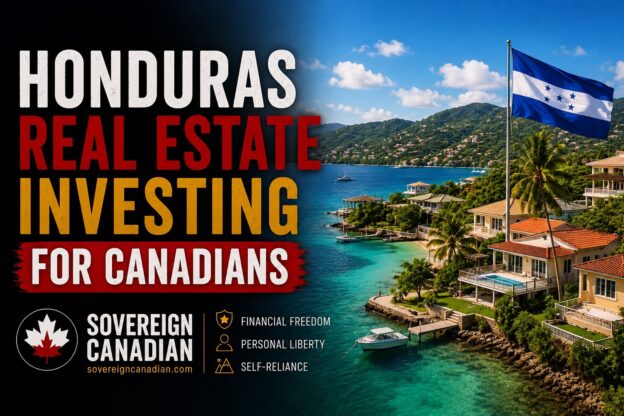
Honduras real estate investing for Canadians – luxury waterfront homes on Roatán with turquoise Caribbean water, Sovereign Canadian field guide

Honduras Real Estate Investing for Canadians

A country deep-dive in the Sovereign Canadian international real estate series. Like everything here, this is personal documentation of how I work through my own portfolio decisions, not financial or legal advice. The Canadian-side machinery that sits above every country in this series – the CRA reporting, the financing reality, the four reasons any of us do this – lives in the foreign real estate investing pillar post. Honduras did not turn up in my offshore real estate survey as a place Canadians are buying in volume, and that absence is part of the story I want to explain here.

Mexico sells proximity. The Dominican Republic sells USD pricing and the only Canadian tax treaty in the Caribbean. Costa Rica sells titled freehold in your own name and political calm. Honduras sells one thing the others can’t match at the price: a world-class coral reef with a condo on top of it, in a market cheap enough that a diver on an Ontario salary can own a piece of it. Roatán is the pitch. Everything else about Honduras is the fine print.

Continue reading
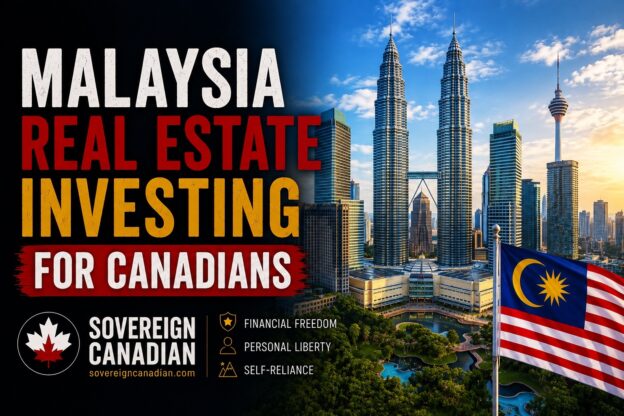
Malaysia real estate investing for Canadians – Kuala Lumpur skyline with the Petronas Twin Towers and KL Tower, Sovereign Canadian foreign real estate guide.

Malaysia Real Estate Investing for Canadians

This is a country deep-dive in the Sovereign Canadian foreign real estate series. Like everything here, it’s personal documentation of how I’m working through my own portfolio decisions, not financial, tax, or legal advice. I verify the numbers before I write them down, and I flag the ones that move so you check them again before you transact.

Malaysia almost never shows up on a Canadian’s shortlist. When I mapped out where Canadians actually buy abroad, the country didn’t crack the list – Mexico, Portugal, and the usual Mediterranean names soaked up all the attention. That’s precisely why it’s worth a serious look. The places everyone buys are efficiently priced. The places nobody thinks about are where the odd bit of value still hides.

Continue reading
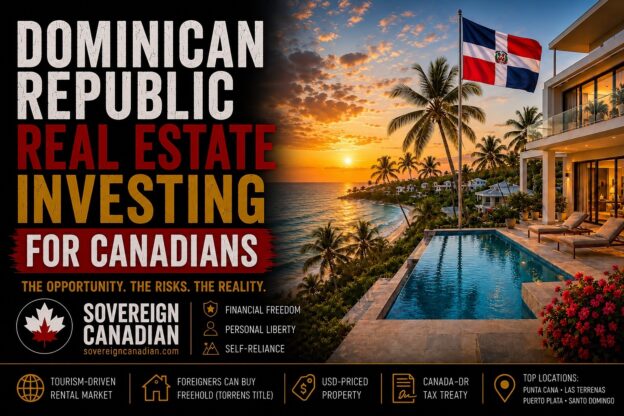
Dominican Republic real estate investing for Canadians - beachfront condos in Punta Cana under the Dominican flag

Dominican Republic Real Estate Investing for Canadians

A country deep-dive in the Sovereign Canadian international real estate series. Like everything here, this is personal documentation of how I work through my own portfolio decisions, not financial or legal advice. The Canadian-side machinery that sits above every country in this series – the CRA reporting, the financing reality, the four reasons any of us do this – lives in the foreign real estate investing pillar post. The Dominican Republic also turned up in my offshore real estate survey as one of the places Canadians are genuinely buying, not just Googling, which is what earned it its own post.

Mexico sells proximity. Portugal sells a legal system you half-recognize and an EU passport at the end of the road. Costa Rica sells titled ownership in your own name with none of the trust-structure friction. The Dominican Republic sells something the other Caribbean and Central American markets in this series can’t quite match at the same time: prices transacted in US dollars, one of the more accessible residency pathways in the Caribbean with a comparatively short ordinary path from permanent residency to naturalization, and – the part almost nobody mentions – an actual tax treaty with Canada.

Continue reading
Ecuador real estate for Canadians - Quito's colonial old town, church domes, and a snow-capped Andean volcano, Sovereign Canadian field guide

Ecuador Real Estate Investing for Canadians

This is a country deep-dive in the Sovereign Canadian international real estate series. For the how-it-actually-works mechanics that sit underneath every one of these posts – the CRA reporting, the financing reality, the four reasons to buy at all – start with the foreign real estate investing pillar post. As always, this is personal documentation and research, not financial or legal advice.

Ecuador is one of those countries that shows up on every “cheapest place to retire” list and almost never on a serious investor’s shortlist, and I wanted to understand why the gap is that wide. The short version, after working through the numbers: the lists are right about the value and the lifestyle, and they are wildly incomplete about everything else. Ecuador in 2026 is a genuinely cheap, genuinely beautiful, US-dollar country with a functioning path to residency – and it is also in a declared state of internal armed conflict, with a homicide rate that went from among the safest in Latin America to among the worst in about four years. Both of those things are true at once, and any honest look at Ecuador real estate for Canadians has to hold them together.

Continue reading
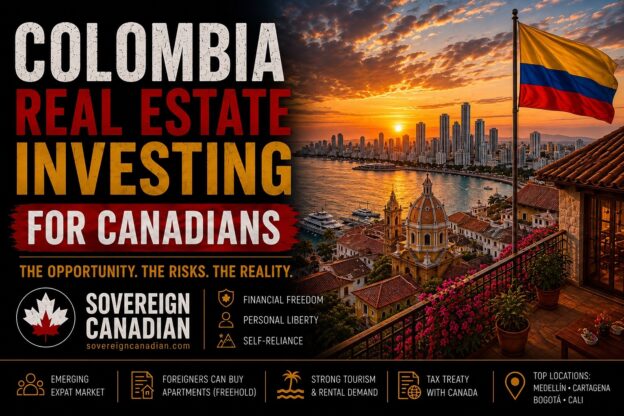
Colombia real estate for Canadians - Cartagena skyline at sunset with the Colombian flag

Colombia Real Estate Investing for Canadians

I have watched Colombia move from “the place your parents warned you about” to a fixture on every Canadian expat forum in about a decade. That shift is real, but it has also produced a lot of breathless marketing, and marketing is exactly what I try to strip out before I put money anywhere. So this is my attempt to look at Colombia real estate for Canadians the way I would look at any other line in a portfolio: what you actually get, what it actually costs, what can actually go wrong, and whether it beats the alternatives I already write about – Mexico, Panama, Costa Rica, Spain, Portugal, Thailand, and Vietnam.

The short version: Colombia is one of the genuinely cheap, genuinely liveable markets left, the buying process is more solid than its reputation suggests, and there is a clean tax treaty with Canada. But it is a peso market with real currency risk, the short-term rental rules are a minefield, and financing barely exists for foreigners. It suits a specific kind of buyer and punishes the careless one.

Continue reading